
In the adrenaline-fueled world of football, the Champions League semifinal between Bayern Munich and Real Madrid stood out as a titanic clash of titans, setting the stage in Bavaria, Germany, before moving to Madrid, Spain for the concluding act. This first leg encounter, marked by a high-stakes 2-2 draw at the Allianz Arena, not only captivated fans but also highlighted the competitive nature of the game with both teams showcasing an equal zeal for victory, reflecting in their near-balanced possession and shots on goal.
As the dust settles on the evenly matched first leg, anticipation skyrockets for the return leg in Madrid. With the initial battle ending in a deadlock, the forthcoming clash promises to be a strategic showdown, where each team will look to leverage their strengths and iron out their flaws for a decisive victory. This match is not just about securing a place in the final but also a battle for supremacy between two of football’s most storied clubs, making it a must-watch for enthusiasts and analysts alike.
Pre-Match Expectations
In the buildup to the highly anticipated UEFA Champions League semifinal, expectations were sky-high for both Bayern Munich and Real Madrid. The pre-match scenario was set with Bayern Munich hosting the first leg at the Allianz Arena in Munich, Germany, on April 30, 2024.
Team Form and Strategy
Bayern Munich’s Recent Struggles and Strengths:
- Despite being dethroned in the Bundesliga, Bayern Munich entered the match with a 15-game unbeaten streak in the UEFA Champions League at home, showcasing their formidable presence with 12 victories and three draws.
- The team’s lineup, spearheaded by Harry Kane who had been directly involved in 10 goals in 10 Champions League games this season, was expected to leverage their strong offensive capabilities.
Real Madrid’s Dominance and Tactical Approach:
- Leading La Liga by a significant margin, Real Madrid boasted an 18-game unbeaten streak across all competitions, highlighting their consistent performance with 12 wins and six draws.
- The team’s strategy focused on a strong counter-attacking game, supported by a rock-solid defense, which had been a key to their success throughout the season.
Key Players and Match-ups
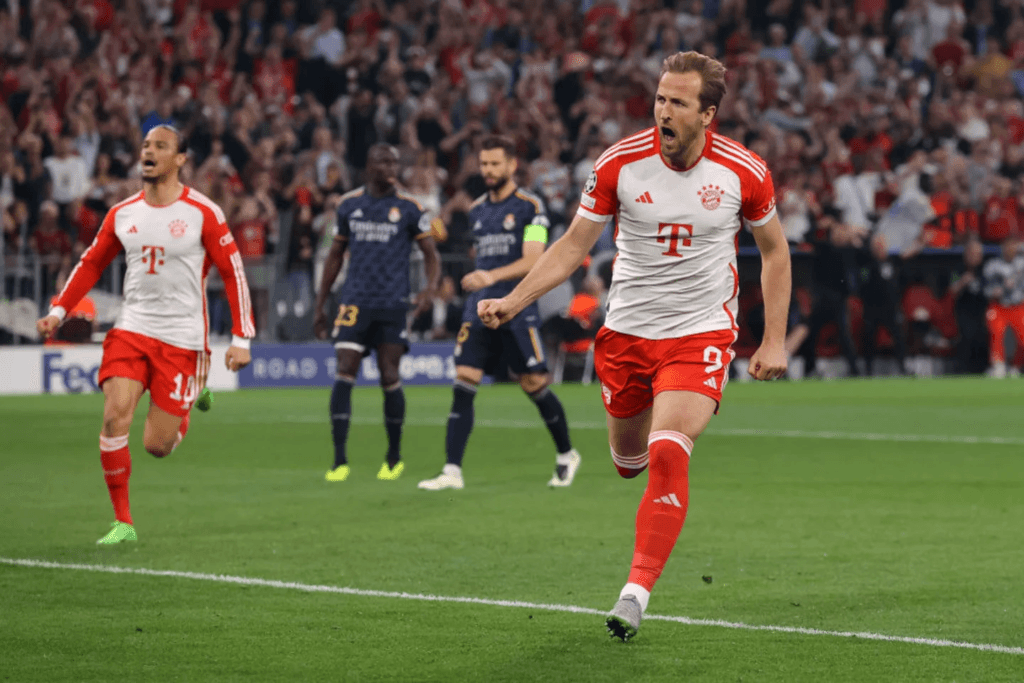
Bayern Munich: Harry Kane, with his record-breaking 42 goals this season, was the focal point of Bayern’s attack, and his performance was crucial for the team’s success.
Real Madrid: Jude Bellingham emerged as a key player, having scored 21 times in 36 games, and leading the Champions League in high-intensity pressures with 496.
Coaching Tactics
Thomas Tuchel’s Experience: With a deep understanding of managing teams against Real Madrid, Tuchel’s tactical acumen was under the spotlight, especially considering Bayern’s need to adapt their game plan due to key injuries, including Matthijs de Ligt’s absence.
Carlo Ancelotti’s Choices: Ancelotti opted for strategic stability by selecting club captain Nacho to partner Antonio Rudiger at center-back, a decision reflecting his trust in experienced players to handle high-pressure games.
Historical Context and Expectations
- Historically, the matches between these two giants have always been closely contested. Real Madrid had won the last three Champions League knockout-round matchups against Bayern, setting a psychological edge.
- However, the Opta supercomputer predictions showed Bayern Munich as narrow favorites for the first leg, winning 39.7% of pre-match simulations, indicating a slight advantage in the home setting.
As fans and analysts awaited the kickoff, the stage was set for a clash that promised not only to decide a finalist but also to add another memorable chapter to the rich history of confrontations between these two footballing powerhouses.
Key Moments of the Match
Opening Goal by Vinicius Junior
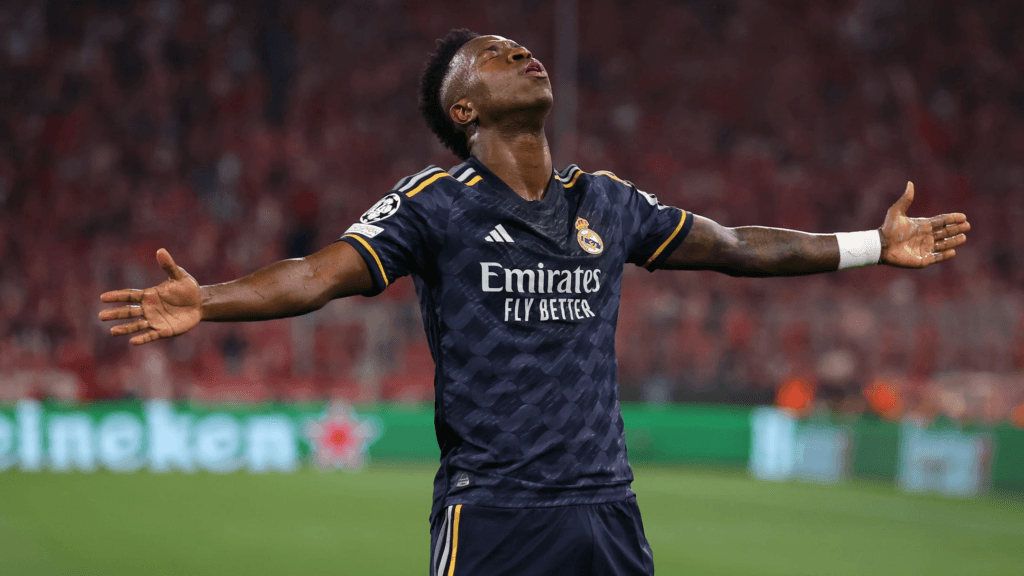
Vinicius Junior of Real Madrid set the tone early by scoring the opening goal in the 24th minute. This goal came from a swift attack, exploiting a lapse in Bayern Munich’s defense, giving Real Madrid an early lead.
Bayern’s Quick Response
Bayern Munich responded vigorously with Leroy Sane scoring in the 53rd minute. This goal marked Sane’s first in 185 days and was a crucial equalizer for Bayern, revitalizing the home crowd’s spirits.
Harry Kane’s Penalty
Shortly after Sane’s goal, Harry Kane added to Bayern’s tally by converting a penalty in the 57th minute. This penalty, earned by a dazzling dribble from Jamal Musiala, briefly put Bayern ahead.
Vinicius Strikes Again
Vinicius Junior proved to be the key player for Real Madrid by scoring a second goal, again from a penalty, in the 83rd minute. This goal not only secured his brace but also drew the match level at 2-2, maintaining the suspense of the tie.
Player of the Match
Vinicius Junior’s impactful performance, characterized by his two crucial goals, earned him the title of Player of the Match. His dynamic presence on the field was a significant factor in keeping Real Madrid in contention throughout the game.
Atmosphere at the Allianz Arena
The atmosphere at the Allianz Arena was described as electric, with fans from both teams contributing to a vibrant and intense environment. This atmosphere highlighted the high stakes and the passionate support for both clubs.
Predictions and Social Media Buzz
Daniel Sturridge’s predictions about the match outcomes, particularly his correct forecasts about Sane and Kane scoring, added an extra layer of intrigue and engagement among fans on social media. His predictions turned out to be remarkably accurate, enhancing his reputation among football enthusiasts.
These key moments collectively depict a match filled with strategic plays, individual brilliance, and dramatic turns, setting a high bar for the upcoming second leg at the Estadio Santiago Bernabéu.
Performance Analysis – Bayern Munich
Tactical Adjustments and Midfield Dynamics
Thomas Tuchel’s strategy for Bayern Munich focused significantly on exploiting Real Madrid’s transitions. The coach aimed to lure Madrid into a false sense of security, creating artificial transitions that Bayern could capitalize on. This tactical nuance was evident as Bayern adjusted their formation in the second half, bringing on Guerrero for Gueta, shifting Müller more centrally, and positioning Lima as a single pivot. These changes allowed the fullbacks to operate deeper, enhancing Bayern’s defense against Madrid’s counter-attacks.
Impact of Substitutions and Formation Shift
The substitution and subsequent formation shift had a profound impact on Bayern’s gameplay. With Sané and Müller moving to the wider regions, they became more lethal in one-vs-one situations on the flanks. This tactical move not only fortified Bayern’s defense but also increased their threat on the wings, making it challenging for Madrid to maintain their defensive structure.
Defensive Strategies and Player Performances
In terms of defense, having the fullbacks positioned deeper provided additional protection, which was crucial in mitigating the threat posed by Madrid’s quick transitions. This defensive solidity was partly due to Toköz’s excellent in-game adaptation, which earned him a rating of 7.5 for effectively controlling Madrid’s transitions. Despite these efforts, Bayern’s defense faced challenges in the first half, struggling to contain Madrid’s attacks. This aspect of their game needed significant improvement, particularly in communication and positioning, to prevent conceding goals easily.
Analyzing Key Players and Match Contributions
The match saw notable performances from several players. Thomas Müller made his 150th Champions League appearance, marking a significant milestone as the first German player to achieve this feat. On the attacking front, Leroy Sané’s decision to play on the left flank paid dividends as he consistently troubled the Madrid defense, highlighting his crucial role in Bayern’s offensive strategies.
Overall Team Performance and Statistics
Statistically, Bayern Munich slightly edged out Real Madrid in possession, holding 52% compared to Madrid’s 48%. They managed 14 shots, with 5 on target, reflecting their aggressive approach and intent to dominate the game. However, despite taking an early lead in possession and control, Madrid scored the first goal against the run of play, which was a critical moment in the match. Bayern showed resilience by equalizing through Leroy Sané, demonstrating their capability to bounce back under pressure.
This analysis of Bayern Munich’s performance in the Champions League semifinal against Real Madrid highlights their tactical flexibility, key player contributions, and areas needing improvement as they prepare for future challenges.
Performance Analysis – Real Madrid
Tactical Execution and Midfield Control
Carlo Ancelotti’s strategy at Real Madrid emphasized a high-pressing game, aimed at swiftly regaining possession in midfield to disrupt Bayern Munich’s setup. This approach was evident as Real Madrid efficiently moved the ball to penetrate Bayern’s defensive block, showcasing their tactical preparedness and execution. The midfield, orchestrated by Jude Bellingham, played a pivotal role, with Bellingham dropping deeper to add an extra layer to Madrid’s formation, enhancing their ability to maintain a progressive shape throughout the match.
Defensive Adjustments and Challenges
Despite a generally solid formation, Real Madrid’s defensive alignment showed lapses, particularly when defending narrower leads. This strategy, while reducing the threat from crosses, occasionally allowed Bayern to exploit the center with attacks from Thomas Müller and Harry Kane from the half spaces. The defensive setup saw a shift to a 4-4-2 formation when under pressure, with Kane and Müller creating overloads, which posed significant challenges for Madrid’s backline. Ancelotti’s adjustments were crucial in managing these overloads and helped stabilize the team during critical phases of the match.
Offensive Contributions and Key Players
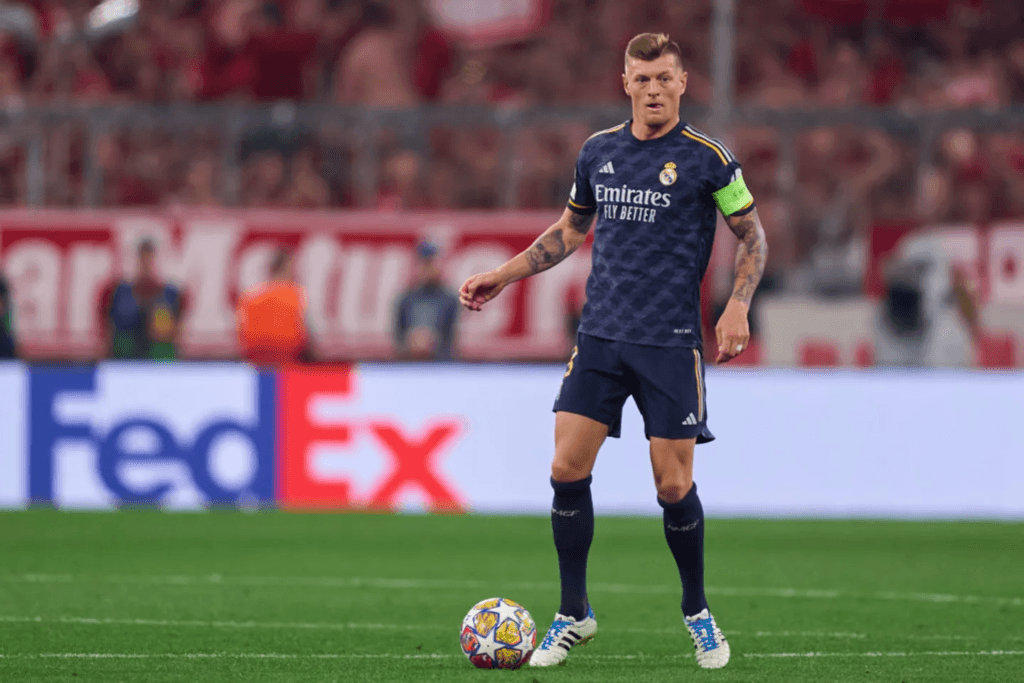
Vinicius Junior emerged as a standout performer, not only scoring both goals for Real Madrid but also displaying a big-game mentality that kept them competitive. His ability to execute under pressure was particularly notable during the late penalty that secured a draw. Toni Kroos also made significant contributions, providing a key assist that underscored his role in Madrid’s strategic plays. The team’s offensive strategy was further highlighted by their effective use of long-range shots, which became a strategic tool against a risk-averse Bayern defense.
Goalkeeping and Defensive Resilience
Real Madrid’s goalkeeping situation saw Andriy Lunin stepping up significantly in the absence of Thibaut Courtois. Lunin’s performance was crucial in keeping Madrid in the game, reflecting his growth and readiness for high-stakes matches. The defensive unit, despite struggling at times, managed to hold off Bayern’s aggressive plays, which was vital for securing the away draw.
Summary of Performance and Outlook
Overall, Real Madrid demonstrated resilience by coming from behind twice, a testament to their tactical flexibility and mental toughness. The team’s ability to adapt to game dynamics, coupled with strategic substitutions and formation tweaks by Ancelotti, played a key role in their performance. Looking ahead to the second leg at the Estadio Santiago Bernabéu, Real Madrid holds a slight edge, being favored to win, which sets the stage for another exciting clash in this storied rivalry.
Tactical Battles
Both Bayern Munich and Real Madrid showcased a high level of tactical acumen, primarily focusing on exploiting moments of transition to create scoring opportunities. The tactical battles were intense, with both teams displaying their strengths in counter-attacking scenarios.
Key Player Showdowns
The matchup between Harry Kane of Bayern Munich and Jude Bellingham of Real Madrid was particularly noteworthy. Kane, known for his sharpshooting, and Bellingham, recognized for his midfield dominance, were central to their teams’ strategies. This head-to-head was a critical element in the tactical setup of both teams, influencing the flow and outcome of the game.
Managerial Insights
Thomas Tuchel, the manager of Bayern Munich, was well aware of the changes in Real Madrid’s system and style of play. His insights were crucial in preparing Bayern to adapt and respond to Real Madrid’s tactics, which had evolved significantly since their last encounter.
Expert Analysis on Team Strategies
Experts noted that both teams relied heavily on swift, incisive counterattacks, utilizing their offensive firepower. This approach was evident throughout the game, with each team looking to quickly transition from defense to attack, trying to catch the other off guard.
Tactical Shifts Observed
Real Madrid’s tactical evolution was particularly highlighted, showing a marked change from previous strategies. This adaptation played a crucial role in their ability to grind out a victory, putting them on the verge of advancing to another UEFA Champions League final.
The tactical battles in this match were a testament to the strategic depth and adaptability of both teams, setting the stage for an even more intriguing second leg of the semifinal.
Implications for the 2nd Leg
With the Champions League semifinal first leg concluding in a gripping 2-2 draw, the stage is set for an intense second leg at the Estadio Santiago Bernabéu. Here are the key factors and expectations for this upcoming match:
Match Timing and Broadcast Details
The crucial second leg is scheduled for May 8, 2023, kicking off at 3 p.m. ET. Football fans in the UK can catch the action on TNT Sports 1 starting at 7pm BST, while in the US, the game will be broadcasted on CBS and Paramount+.
Betting Odds and Expert Predictions
The betting landscape sees Bayern Munich priced at +150, with Real Madrid slightly behind at +165. The odds suggest a close match, with a draw at +260. Experts lean towards a high-scoring affair, predicting both teams to score with over 2.5 goals at odds of -110.
Historical Context
Bayern Munich faces a challenging task, as their last victory at the Bernabéu dates back to 2001. This historical aspect adds an extra layer of difficulty for Bayern, heightening the anticipation for whether they can overturn this long-standing record.
Key Player Returns
Real Madrid’s squad could be bolstered by the return of their key goalkeeper, Thibaut Courtois, who is expected to be back for the second leg. His presence could be a critical factor in strengthening Madrid’s defense against a potent Bayern attack.
Current Favorite
Despite the evenly matched first leg, Real Madrid is favored to win the upcoming match at their home ground. This favoritism is partly due to the strategic advantage of having scored away goals in the first leg.
Open Competition
Reflecting on the first leg’s results and the strengths of both teams, the tie remains wide open. Both Bayern Munich and Real Madrid have demonstrated their capabilities to advance to the final, making the second leg a must-watch event for football fans globally.
These elements collectively set the scene for a thrilling and unpredictable conclusion to this Champions League semifinal, where strategy, historical precedents, and individual brilliance will all play pivotal roles.
Conclusion
Through intense strategic battles and prominent tactical execution, the Champions League semifinal first leg between Bayern Munich and Real Madrid indeed lived up to its billing, ending in a captivating 2-2 draw. The best performers, Vinicius Junior for Real Madrid with his crucial goals, and Bayern Munich’s Harry Kane, who continued his goal-scoring prowess, elucidated the high stakes and quality on display. Key moments like Vinicius Junior’s brace and Harry Kane’s penalty highlight the evenly matched nature of the contest. Overall, the tactical acumen from both sides kept fans on the edge, with neither team establishing clear dominance, setting a highly anticipated tone for the second leg.
Looking ahead, expectations for the second leg at the Estadio Santiago Bernabéu are sky-high, with the tie still delicately poised. The return of key players like Thibaut Courtois could offer Real Madrid a defensive boost, while Bayern Munich will look to capitalize on any opportunity to overturn their historical challenges in Madrid. The stage is set for another thrilling encounter, where strategy, team form, and individual brilliance will determine who advances to the final. This tactical chess match, coupled with the desire for Champions League glory, promises to deliver football of the highest order.